Klara Perry · 14 September 2026
The Evolution of Ingredient Sourcing Practices in the Natural Health Supplement Industry
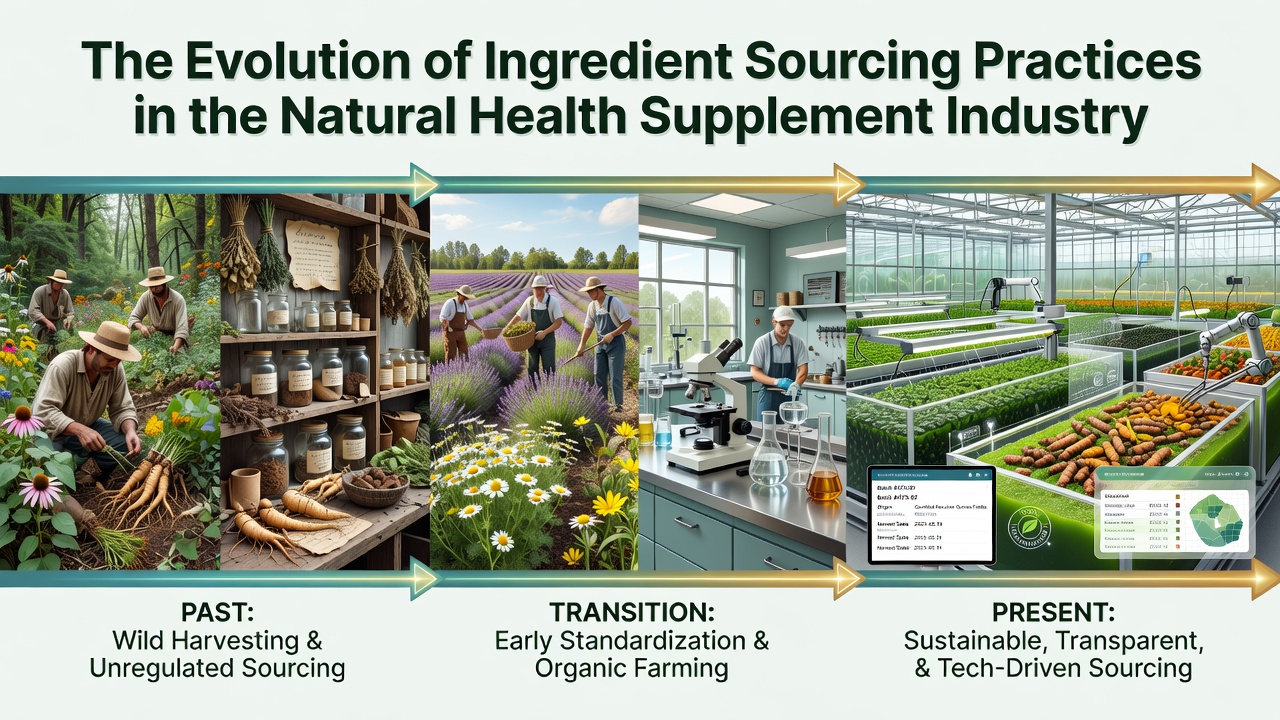
Ingredient sourcing in the natural health supplement industry has shifted dramatically over decades as demand grew and supply chains expanded across continents. Early practices relied on local farms and wild harvesting while modern methods incorporate global networks, strict traceability systems, and advanced verification tools. Research from regulatory bodies shows that these changes reflect broader shifts in consumer expectations, scientific standards, and environmental considerations that continue to shape how companies obtain raw materials like herbs, vitamins, and botanicals.
Traditional Methods and Local Origins
Decades ago manufacturers typically drew ingredients from nearby regions where growers cultivated plants using time-honored techniques passed through generations. Small-scale operations collected roots, leaves, and extracts within short distances to minimize spoilage and maintain freshness. Observers note that this approach limited variety yet ensured direct oversight of quality through personal relationships between producers and processors. Studies on historical supply chains indicate that contamination risks stayed lower because materials rarely traveled far before reaching formulation facilities.
Global Expansion and Industrial Scaling
Postwar trade growth opened access to diverse botanical sources from Asia, South America, and Africa where climate conditions supported cultivation of specialized plants unavailable in northern markets. Companies began importing large volumes of ingredients such as ginseng, turmeric, and spirulina as production volumes rose to meet rising supplement sales. Data from industry reports reveals that by the late twentieth century sourcing networks spanned multiple countries while introducing challenges around consistency and verification. Processors adapted by establishing contracts with overseas suppliers and implementing basic testing protocols at ports of entry.
Regulatory Frameworks Shape Sourcing Standards
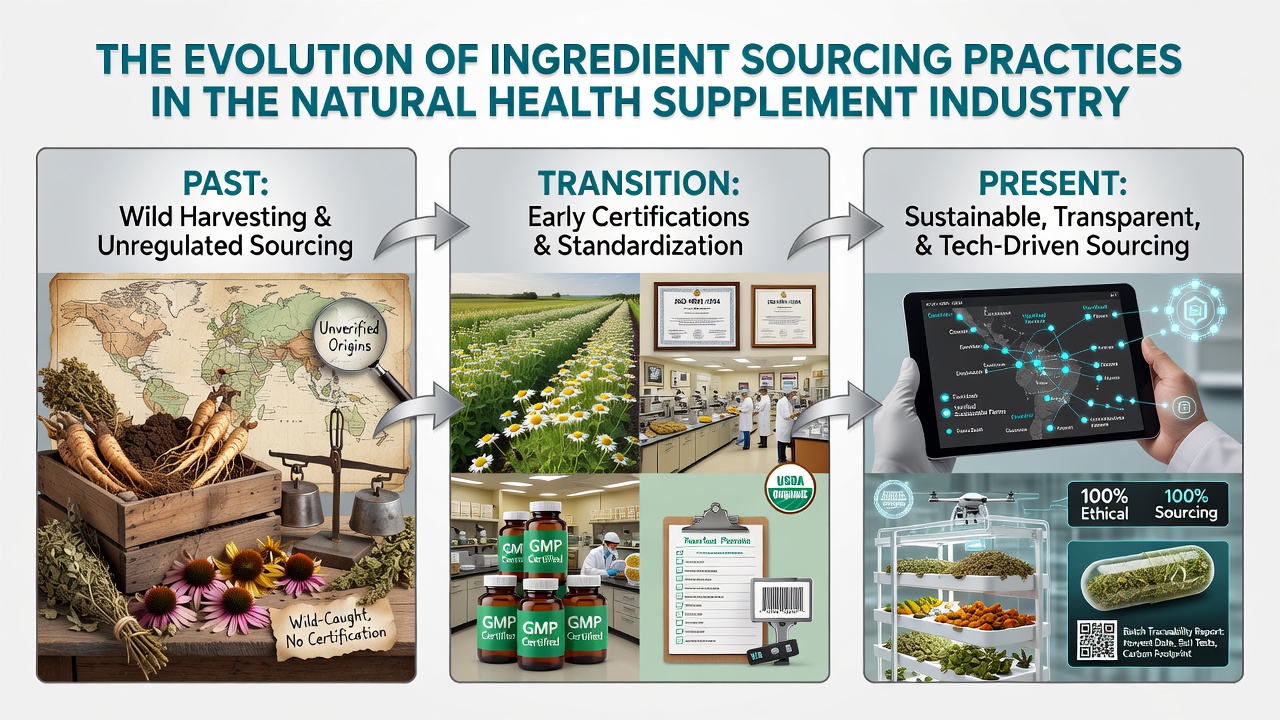
Government agencies introduced guidelines that required documented origins and purity checks for dietary ingredients. The U.S. Food and Drug Administration established current good manufacturing practices that mandated traceability records for every batch of raw material. FDA dietary supplement regulations emphasize supplier qualification and identity verification to reduce adulteration incidents. Similar rules emerged in other regions where agencies like Health Canada and the Australian Therapeutic Goods Administration set parallel requirements for imported botanicals and extracts. These policies pushed companies to audit farms and processors regularly rather than accept shipments on trust alone.
Sustainability and Ethical Considerations
Environmental concerns prompted many firms to prioritize certified organic and fair-trade sources during the 2000s and 2010s. Certifications from third-party organizations verified that harvesting methods avoided overexploitation of wild populations and supported worker wages in developing regions. Evidence from supply chain analyses shows that sustainable sourcing programs reduced deforestation linked to certain herb crops while improving soil management on participating farms. Retailers began demanding proof of these practices as consumers sought products aligned with broader ecological goals.
Technology Transforms Traceability
Digital tools entered the picture as blockchain platforms and sensor networks allowed real-time monitoring of shipments from remote cultivation sites. Researchers developed DNA testing methods that confirm plant species and detect substitutions more accurately than traditional visual inspections. Industry data indicates that companies adopting these systems cut recall incidents and strengthened claims about ingredient authenticity. Automated sampling at multiple supply chain points provides continuous data streams that regulators and buyers review during audits. By September 2026 several major manufacturers plan to expand satellite-linked monitoring programs for high-risk botanicals sourced from biodiversity hotspots.
Current Practices and Ongoing Adaptations
Today's sourcing strategies blend traditional knowledge with precision agriculture techniques that optimize yields and nutrient profiles. Vertical integration appears in some operations where supplement brands acquire or partner directly with cultivation sites to control variables from seed selection onward. Reports from trade associations highlight increased use of regenerative farming methods that restore soil health and biodiversity on ingredient plots. Challenges persist around climate variability and geopolitical disruptions that affect availability of key materials like certain marine-sourced omega-3 oils or rare adaptogenic herbs.
Conclusion
The progression of ingredient sourcing reflects continuous responses to regulatory demands, technological capabilities, and resource availability. Companies now maintain extensive supplier databases and conduct frequent third-party verifications that were uncommon in earlier eras. Ongoing developments in analytical testing and data management promise further refinements while maintaining focus on safety and consistency across global networks.