
Iris Berger · 28 September 2026
Supply Chain Transparency Mechanisms and Their Effects on Verifying Bioactive Compound Levels in Traditional Plant Extracts Used for Daily Wellness Routines
Supply chain transparency mechanisms have gained traction in the herbal supplement sector because they allow producers and regulators to trace plant materials from cultivation sites through extraction facilities and into finished wellness products. Researchers note that these systems combine digital tracking tools with laboratory verification protocols to confirm the presence and concentration of bioactive compounds such as curcuminoids in turmeric extracts or ginsenosides in ginseng preparations. Data collected at each stage helps manufacturers maintain consistency across batches intended for daily use in teas, capsules, and tinctures.
Core Components of Traceability Systems
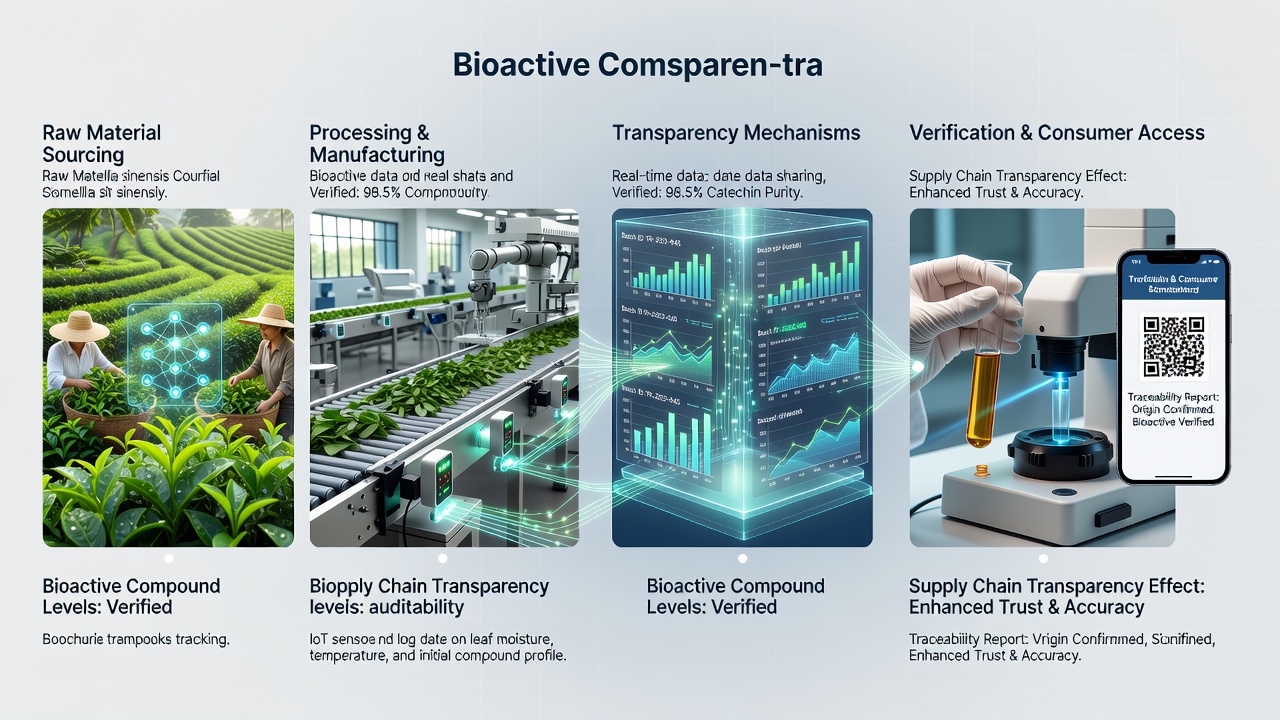
Blockchain ledgers record every transfer of raw plant material along with timestamps and handler identities while radio-frequency identification tags attached to harvest containers transmit location data in real time. Spectroscopic testing stations positioned at processing plants measure marker compounds immediately after extraction so that any deviation from expected profiles triggers an alert before the batch advances further down the line. Industry reports indicate that companies adopting these layered approaches reduce instances of substitution or dilution that previously affected traditional extracts sourced from multiple continents.
Certification programs administered by third-party auditors require documentation of cultivation practices including soil composition records and pesticide application logs. These records feed into centralized databases accessible to buyers who can query specific lot numbers and retrieve associated test results for bioactive content. European regulatory bodies have begun requiring similar documentation for imports classified as traditional herbal medicinal products which has prompted suppliers in Asia and Africa to upgrade their record-keeping procedures.
Verification of Bioactive Concentrations
High-performance liquid chromatography remains the primary analytical method used to quantify target compounds in finished extracts yet its reliability depends on upstream chain-of-custody information. When transparency mechanisms link a particular harvest batch to its extraction parameters analysts can adjust for variables such as drying temperature or solvent ratios that influence final potency. Studies published by academic institutions show that extracts accompanied by complete traceability data exhibit narrower ranges of variation in measured bioactive levels compared with those lacking such documentation.
One processing facility in Southeast Asia implemented a combined blockchain and near-infrared spectroscopy system in 2024 and reported a 27 percent improvement in batch acceptance rates for ashwagandha root extracts destined for stress-support formulations. Observers note that the integration allowed technicians to correlate soil nutrient data with withanolide concentrations measured at the extraction stage thereby enabling earlier adjustments in sourcing strategies. Similar projects have emerged in South American regions supplying maca and yerba mate extracts where seasonal rainfall patterns affect secondary metabolite profiles.
Regulatory Updates Expected by September 2026
Health authorities in the United States and the European Union continue to refine guidelines that tie supply chain documentation directly to label claims about bioactive content. The FDA has signaled that forthcoming compliance frameworks will emphasize digital record accessibility for imported botanical ingredients. Meanwhile the European Medicines Agency has circulated draft monographs requiring quantitative data on key constituents for products marketed with traditional use statements. These parallel developments are scheduled for final review cycles concluding around September 2026.
Canadian and Australian agencies have also introduced pilot programs that reward suppliers demonstrating end-to-end traceability with expedited border clearance for wellness ingredients. Participants submit electronic dossiers containing cultivation coordinates harvest dates and post-extraction assay certificates which regulators cross-reference against random sampling results at ports of entry. Early findings suggest that such programs shorten average clearance times by several days while maintaining existing safety standards.
Practical Outcomes for Wellness Product Users
Consumers who incorporate traditional plant extracts into daily routines benefit when manufacturers publish lot-specific bioactive measurements derived from verified supply chains. Labels that include QR codes linking to assay certificates allow individuals to confirm that a turmeric capsule contains at least 95 percent curcuminoids or that a green tea extract delivers a stated amount of epigallocatechin gallate. Retailers report increased repeat purchases for products accompanied by such verification data because users can track consistency across multiple orders.
Formulators gain flexibility as well because transparent sourcing enables them to select extracts with predictable compound profiles for combination products. A manufacturer blending multiple adaptogenic herbs for example can adjust inclusion rates based on documented bioactive percentages rather than relying solely on average values. This precision supports the production of standardized daily wellness blends without over- or under-dosing specific constituents.
Conclusion
Supply chain transparency mechanisms connect cultivation records extraction parameters and laboratory measurements into a continuous data stream that supports accurate verification of bioactive compound levels in traditional plant extracts. Regulatory timelines culminating in September 2026 are expected to formalize many of these requirements across major markets. Manufacturers and testing laboratories continue to refine integrated digital and analytical tools that link each stage of production to measurable outcomes in finished wellness products.